Convenience Store Woman, Sayaka Murata
unstable-self
/
For years, Keiko has been hearing the same questions. When will she find a proper job, when will she start a career, when will she marry and start a family? She chooses an existence reduced to the minimum: a job at a konbini, a Japanese 24-hour convenience store, where she stacks shelves, operates the register, and remains outside the race for social and professional status. Her surroundings see this as a failure; Keiko sees it as an opportunity to live beyond the expectations of others.
This gesture of refusal became the most recognizable theme of the book. Millions of readers found in it their own fatigue with the pressure of success and the necessity of living according to a ready-made template.
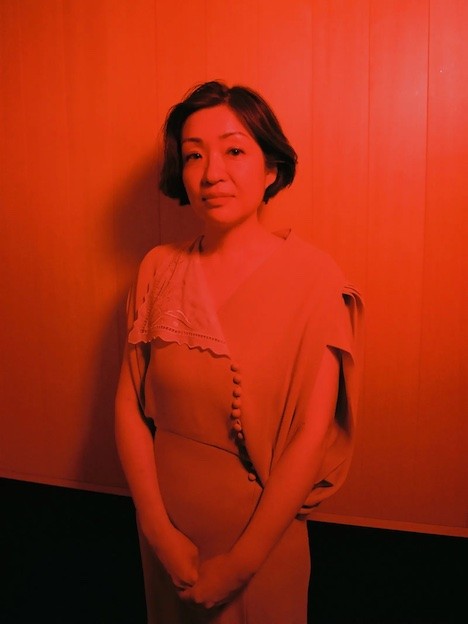
SAYAKA MURATA
This is, however, only the first layer of this novel. Keiko does not just reject a career, marriage, and family. She also relinquishes the need to create her own form of life, accepting in return the pure role of an executor.
Work in a konbini is subordinated to precise procedures. Employees greet customers with the same formulas, perform specific gestures, restock goods, check expiration dates, prepare ready meals, run the cash register, and maintain the store's appearance according to established rules. Every task has its order, pace, and method of execution. Regulations, instructions, and corporate standards organize the consecutive hours of work, leaving little room for improvisation. One only has to step into this rhythm and faithfully reproduce it.
Keiko borrows her manner of speaking, clothes, and reactions from her colleagues, as if assembling a social persona from ready-made parts. It is enough to change the tone of her voice and buy a similar blouse for her surroundings to assume that everything is heading in the right direction. She allows the store to format her movements, words, and every minute of the day.
DELEGATING THE SELF
Keiko only seemingly frees herself from the social norm. She chooses an alternative norm, one even more mechanical, because the konbini does not demand from her meaning, biography, erotics, motherhood, or ambition, but only correct functioning. The protagonist abandons the social matrix in favor of the rigor of registers and shelves—and only in this artificial world is she able to exist at all.
Keiko’s surroundings need a husband, children, a career, and status to consider a life normal. Keiko needs the store, the uniform, the voice from the instructions, the rhythm of shelves and registers. The konbini gives her a ready-made code: how to speak, how to move, when to smile, what to do with her body, how to react.
Society says "choose yourself," but Keiko does not know what she is supposed to choose. The konbini says "perform a function"—and that is the only comprehensible model of existence for her.
LIFE WITHOUT AN AUTOBIOGRAPHY
Keiko's choice is illuminated by Erich Fromm's "Escape from Freedom." Fromm described an individual who, after stepping out of ready-made frameworks, is left alone with the necessity of deciding about their own life and therefore seeks a structure to take over some of these decisions.
In the past, this role was played by the monastery, the army, or the civil service. They provided hierarchy, ritual, belonging, and a place in a larger narrative. The konbini offers a schedule, a uniform, and ready-made procedures. Fromm described the escape to authority. Murata shows the escape to an instruction manual.
Today, the world demands a continuous creation of the self from scratch: defining one's own style, views, sexuality, relationships, and career. An individual is expected to design their body, future, and way of living, and then constantly prove that their choices form a coherent story. Modernity turns identity into an endless project and a report on personal success.
The konbini allows Keiko to exist without an autobiography—it is enough that she functions correctly.
_The book was awarded the 2016 Akutagawa Prize_
