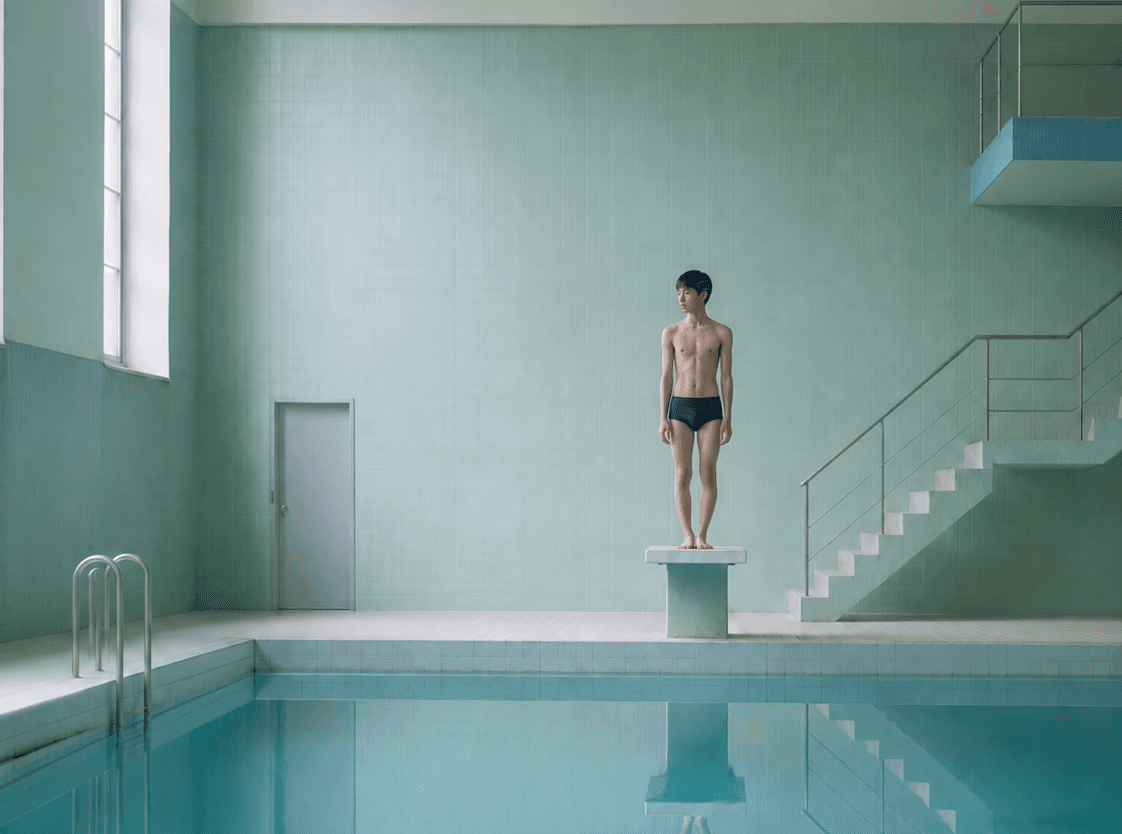
Almost Transparent Blue, Ryu Murakami
dark-margins
/
Arms intertwined, skin sticking to skin, epidermis rubbing against epidermis, muscles tensed, bodies overheated, sheets damp, rooms airless. The smell of sweat, the glass of bottles, whisky, doses, acid, the chemical stench of intoxication. Nameless sex, the weight of bodies, forced breathing, humiliation, foreign slang, soldiers from the base, sudden laughter. Stomach cramps, the chill of tiles, spasms in the esophagus, bile, sticky saliva, trembling fingers, vomiting, a needle, the plastic of a syringe, the pressure of a rubber tourniquet, the pulse of a vein, the puncture, blood entering the barrel, sudden shock, an explosion of light, pupils locked open, inertia, drowsiness, walls beginning to ripple, the ceiling turning fluid, perspective deforming, stimuli collapsing into chaos, plaster cracking, phantom insects raining down, walls of raw meat, visions of fire. A bass loop, guitar distortion, vibrating membranes, the crackle of records, half-conscious conversations. Reinforced concrete runways, steel fencing, sheet-metal hangars, the glare of neon, vinyl flooring, dust circulating through air conditioning.
Everything circulates through the same closed system: hunger, consumption, exhaustion, momentary ecstasy, sudden disgust, empty continuation.
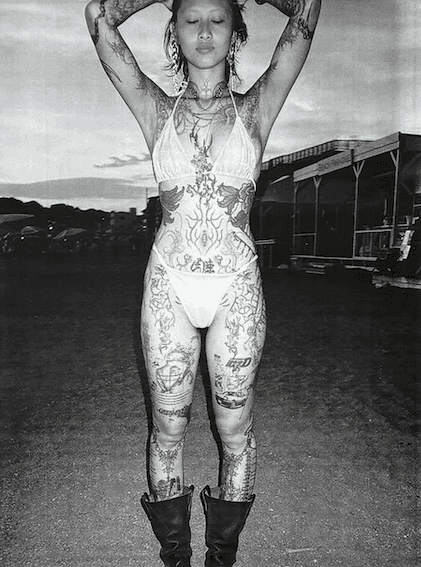
kill me softly (キルミー ソフトリー)
HOT FUDGE / Fussa, Japan/
The action of Almost Transparent Blue revolves around a group of young Japanese people living near the American military base in Fussa, on the outskirts of Tokyo. Murakami reveals not only their physical subordination to American soldiers, but a deeper process: complete surrender to an alien culture, self-destruction, and the attempt to drown out their own emptiness.
Their everyday existence is reduced to an unbroken cycle of self-destruction: heroin, amphetamine and LSD, violence, sexual orgies, immersion in psychedelic rock, and a state of permanent intoxication.
THE BODY
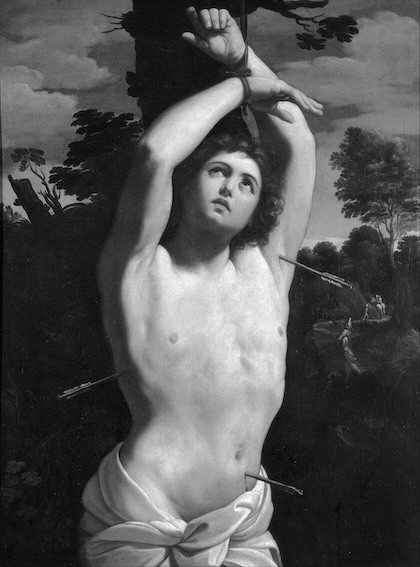
The protagonist of Mishima’s Confessions of a Mask, looking at a painting of Saint Sebastian, sees a young, almost naked man bound to a tree and pierced by arrows. Yet he does not experience this body as mere nudity. What attracts him is the body transformed by art: masculine, bound, wounded and exposed to the gaze of others. In Mishima, sensuality is always filtered through pain, martyrdom and death, becoming pure form — an icon, a pose, beautiful suffering.
In Ryū Murakami, the body carries no higher meaning — it simply reacts. It absorbs substances, submits to touch, grows tired, collapses, sweats, trembles, vomits, collides with other bodies and loses its boundaries. It becomes a surface of contact rather than a spiritual figure.
It is reduced to pure physicality: a dirty mattress, sweat, drug hunger, drowsiness, accidental touch. It no longer participates in any myth. It exists within a direct, brutal circulation of stimuli.
In Mishima, eroticism often required distance: an image, a pose, the tension between desire and prohibition. In Ryū Murakami, the body is too close. There is no time to admire it from a distance — there is only clutter, pressure and physical compression. Closeness becomes not so much fulfilment as the loss of boundaries.
Murakami shows a body through which a particular world passes: post-war Japan, the American base, imported music, foreign language, consumer culture and the collapse of former sanctities. He does not look at history through grand theories, but through pure physiology. An entire era becomes visible in this body — not in ideas, political programmes or manifestos, but in reactions of the skin, exhaustion, humiliation, a sexual hunger for stimuli and the inability to stop.
A BORDERLINE BOOK
Yukio Mishima’s death in 1970 closed the era of the “total writer” in Japan — a creator who fused literature, the body, national myth and stylistic perfection into a single, almost theatrical whole. Just six years later, in 1976, twenty-four-year-old Ryū Murakami radically broke with that inheritance in his debut. He abandoned the elevated style of the great masters, the beautification of brutal experience and the tragic form. In place of symbolic Japan and tradition, he offered a reality that was raw, physical, chemical and stripped of myth.
The novel, awarded both the Akutagawa Prize and the Gunzō Prize, caused a literary shock. For some critics it was a decadent, vulgar text devoid of psychological depth; for others, a brutal sign of the birth of a new sensibility. Murakami was not so much destroying Japanese tradition as showing a reality that its old language could no longer contain.
Almost Transparent Blue is a difficult book: exhausting, uneven and at times repulsive, but also groundbreaking. Murakami abandons symbols, beautiful style and cool distance in favour of a record that is direct, dirty and stripped of any aesthetic filter. This debut announced a completely different kind of prose: predatory, nervous and mercilessly stripped of beauty.
The novel was awarded the prestigious Akutagawa Prize in 1976.